Hard Shell vs. Soft Silicone: Which Actually Saves Your Screen?
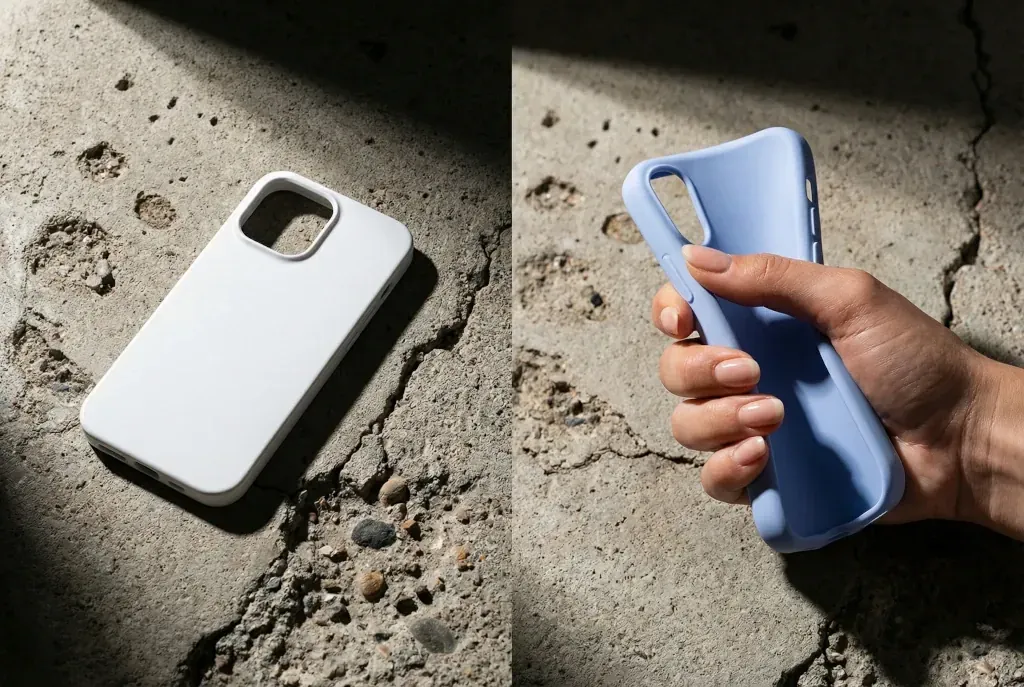
That sound. The dull crack of glass meeting pavement. You flip your phone over and see the spider web spreading across your screen. It's the worst feeling, and it happens fast.
Most people reach for the hardest case they can find after a crack, assuming rigid means safe. That instinct is wrong, and it's costing people screens. The material on the back of your case matters far less than you think. What actually determines whether your screen survives is shock dispersion and one measurement most people ignore entirely: the bezel lip.
The Hard Shell: Polycarbonate
Hard shell cases are made from polycarbonate (PC) — the same rigid plastic used in safety goggles and bulletproof glass composites. They're slim, glossy, and feel substantial in your hand. They also look great because PC takes high-resolution printing beautifully.
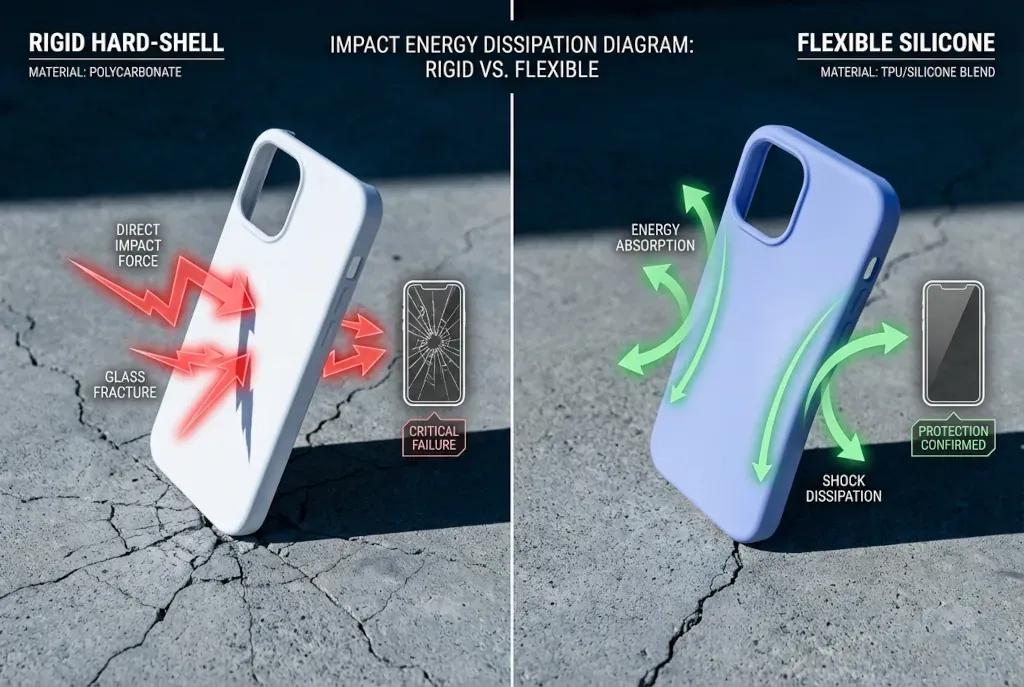
Here's the physics problem: polycarbonate has high stiffness and almost zero flex. When it hits the ground, the energy from the impact doesn't get absorbed — it travels straight through the case and into your phone's glass. It's like wearing a suit of armor with no padding underneath. The armor might survive, but the person inside gets the full force.
There's a second problem. Many hard shell cases are snap-on designs. On a hard enough impact, the case can pop off entirely, leaving your phone naked for the second bounce. You've seen it happen: phone bounces once, case flies off, phone hits the ground again unprotected.
Where hard shells win: scratch resistance. If keys and coins in your purse are your main concern, polycarbonate handles that well. But for drops? It's the wrong tool.
The Soft Shell: Silicone
Silicone cases are the opposite extreme. They're squishy, grippy, and flexible. When your phone hits the ground, silicone compresses and absorbs the initial blow like dropping an egg onto a pillow.
For everyday fumbles — slipping off a nightstand, falling off your lap — silicone does a decent job. But it has two failure modes that matter:
Bottoming out. Drop your phone from ear height or off a balcony, and the silicone compresses fully. Once it's fully compressed, there's nothing left to absorb. The remaining force passes directly into your phone. The cushion runs out.
Loose lips. Silicone stretches over time, especially around the edges. After a few months of daily use, the fit loosens. During a drop, those soft edges peel back from the phone, exposing the screen corners to direct contact with the ground. Corners are where the vast majority of screen cracks start.
And then there's the lint factor. Silicone is essentially a dust magnet. Pull your phone out of a purse or pocket and it comes out covered in fuzz, hair, and crumbs. For anyone who cares about how their phone looks, that's a dealbreaker.
The Real Winner: TPU Hybrids
Thermoplastic Polyurethane sits in the middle ground — and that's exactly where protection lives.
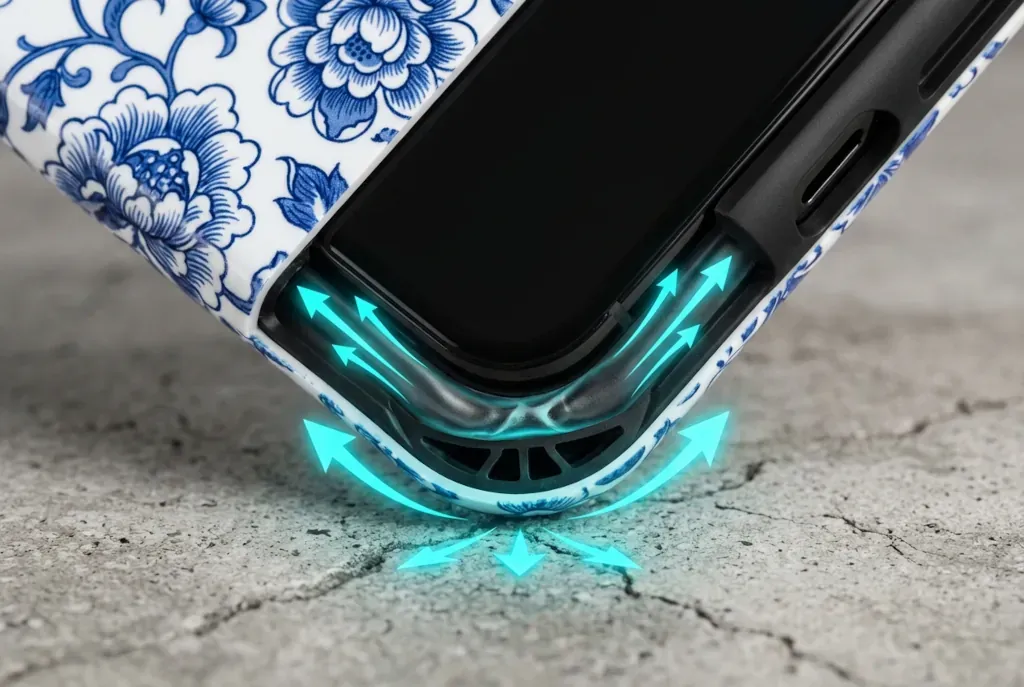
TPU is hard enough to maintain its shape and keep a firm grip on your phone. It won't peel away during a drop, and it won't stretch out over months of use. But it's soft enough to flex on impact, absorbing the shockwave and dispersing it away from your screen instead of transmitting it through.
The secret weapon in the best TPU cases is corner air pockets — tiny gaps engineered into the internal corners of the case. These work exactly like the air units in running shoes. When the corner hits the ground (which is where 90% of drops land), the air pocket compresses first, absorbing the energy before it reaches the phone. Once the impact passes, the pocket returns to its original shape, ready for the next drop.
The Bezel Rule: The Only Measurement That Matters
Here's the truth that case marketing doesn't want to talk about: it doesn't matter if your case is made of titanium or jelly if the screen touches the ground first.
The raised bezel — that lip around the edge of your case — is what keeps your screen suspended above the surface when your phone lands face-down. Without enough bezel height, the screen contacts the ground directly, and no amount of shock absorption will save it.
Look for a bezel of 1.5mm to 2mm. Anything less and you're taking a gamble.
The coin test: Place your phone face-down on a flat surface. Try to slide a coin under the screen. If the coin touches the glass, your case doesn't have enough bezel and your screen is at risk. A proper case creates a visible gap between the screen and the surface.
The same applies to the camera module. Your rear cameras sit on a raised bump, and without a protective ring extending above them, every time you set your phone down on a table, the lenses are grinding against the surface.
Comparison: At a Glance
| Feature | Hard Case (PC) | Soft Case (Silicone) | Hybrid Case (TPU) |
|---|---|---|---|
| Drop Protection | Low — transfers shock | Medium — good for low drops | High — absorbs and disperses |
| Screen Safety | Poor — often no lip | Medium — edges loosen | Best — rigid lip holds |
| Grip | Slippery | Very grippy, sticks to pockets | Balanced |
| Durability | Can crack on impact | Stretches, tears over time | Holds shape long-term |
| Print Quality | High resolution | Solid colors only | High resolution + clear options |
| Lint | Minimal | Heavy | Minimal |
Which One Should You Buy?
If thinness is your only priority: A hard shell will give you the slimmest profile. Just understand that you're trading away almost all drop protection. One bad fall and you're buying a new screen.
If you want the best grip and tactile feel: Silicone delivers that satisfying squishy texture. Keep a lint roller in your bag, and consider replacing the case every few months when it starts to stretch.
If you want to actually protect your screen: Get a TPU hybrid with a raised bezel. It's the only material that absorbs shock, holds its shape, and keeps the screen off the ground. That's the engineering we put into every ChicScreens case — German TPU bumpers with a polycarbonate backplate and a 2mm raised lip.
For a deeper dive into material science, yellowing prevention, and how to style your protection, check out our complete guide: The Science of Style.
Protection that looks good
Every ChicScreens case uses TPU hybrid construction with a 2mm raised bezel. Drop-tested from 6 feet.
Shop Cases