The Science of Style: The Complete Guide to Aesthetic Tech Protection
You know the dilemma. You're standing in the store, phone in one hand, staring at two cases. One is a cute floral design that feels like it'll shatter the moment it touches concrete. The other is a thick, ugly brick that could survive a car running over it but makes your phone look like a walkie-talkie from 1994.
For years, the phone case industry told you to pick one: fashion or function. That era is over. Material science has caught up, and today's best cases are slim, protective, and genuinely good-looking. This guide explains exactly how that works, from the physics of drop protection to the materials that matter, to the styling choices that turn your phone into a real accessory.
It's Not About Thickness, It's About Dispersion
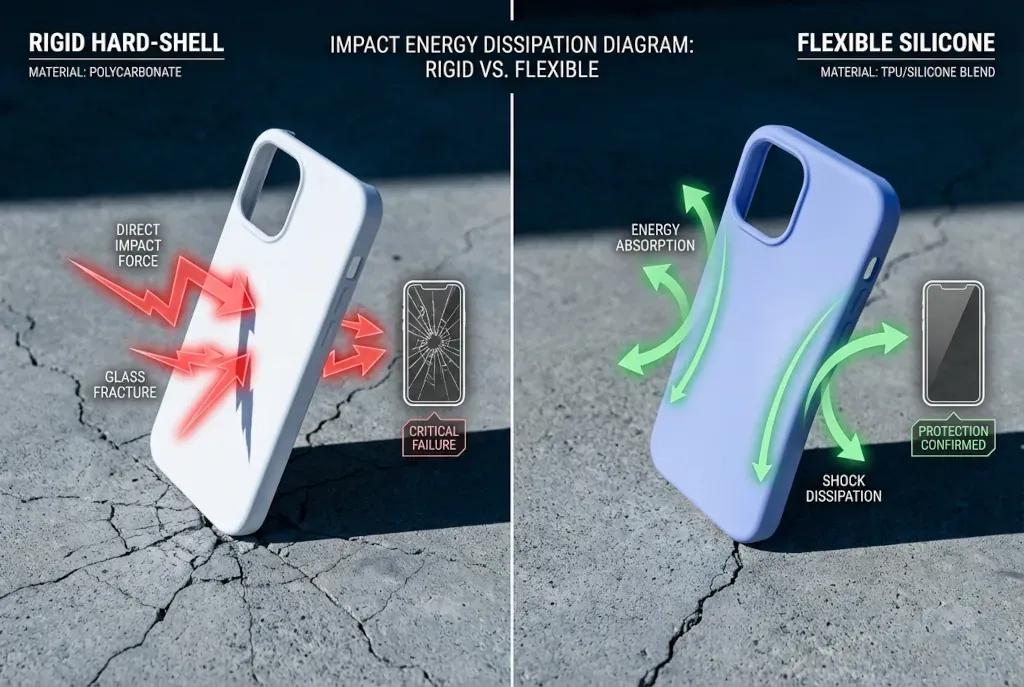
Most people think thicker means safer. It doesn't. What actually protects your phone is how the case handles kinetic energy when it hits the ground.
Think about it this way: if you drop an egg into a steel box, the egg breaks because the rigid walls transmit the force directly into the shell. Drop that same egg onto a thick pillow, and it survives because the pillow absorbs and disperses the energy across a wide area over a longer period of time.
Phone cases work the same way. A rigid case that doesn't flex transmits the shockwave straight into your glass screen. A case that gives a little under impact spreads that energy outward and absorbs it, keeping your phone intact.
The Anatomy of a Protective Case
Every well-designed case has three critical zones working together:
The Bumper (TPU): The flexible edges around your phone. These are made from Thermoplastic Polyurethane, a material that bends on impact and springs back. The corners matter most because that's where phones land 90% of the time. The best cases have tiny air pockets built into the corners that compress on impact, just like the air units in running shoes.
The Raised Bezel: This is the lip that extends above your screen and camera lenses. A good case has at least 1.5mm of rise. When your phone falls face-down, the bezel touches the ground first, keeping the glass suspended. Without it, your screen is touching concrete every time it lands wrong.
The Camera Ring: Your camera lenses are the most expensive single component to repair. A raised ring around the camera module keeps the lenses off flat surfaces and absorbs any direct hits.
"Military Grade" — What That Actually Means
You've seen the label: MIL-STD-810G. It sounds impressive, but the standard was designed for military equipment testing, not phone cases. Some brands self-certify, meaning they run a few drops from four feet and slap the label on. Others actually send their products to independent labs.
The real distinction is between shock absorption (the case absorbs energy so your phone doesn't) and impact resistance (the case itself doesn't crack). You want both, but shock absorption matters more for your screen. A case that survives a drop but lets the force pass through to your phone isn't doing its job.
The Big Three: TPU vs. PC vs. Silicone
Not all plastic is created equal. Here's what you're actually buying:
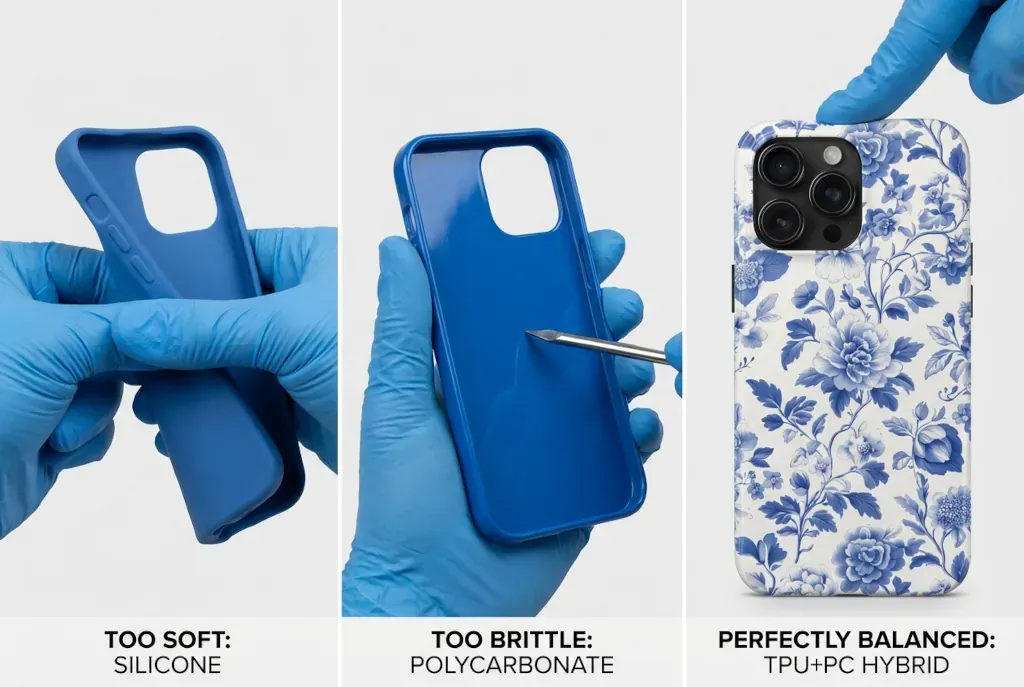
TPU (Thermoplastic Polyurethane) is the gold standard for phone protection. It's flexible enough to absorb shock but firm enough to hold its shape. It doesn't crack, doesn't peel away from your phone on impact, and it resists yellowing far better than basic silicone. Most premium cases use TPU for the entire bumper and frame.
PC (Polycarbonate) is the hard, clear plastic you see on the back of many cases. It's excellent for scratch resistance and provides a smooth surface for high-resolution printing. On its own, it's terrible for drop protection because it transmits shock directly. But when fused with a TPU bumper, it creates the ideal combination: a hard back for aesthetics and scratch resistance, and flexible edges for impact absorption.
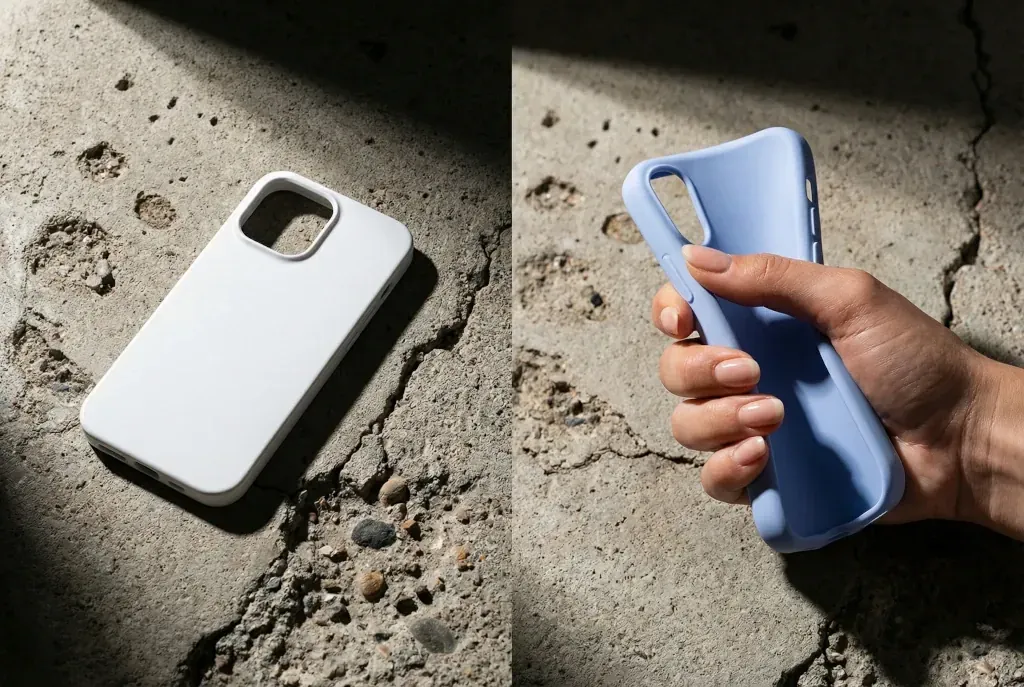
Silicone feels great in your hand and offers solid grip, but it has real drawbacks. It attracts lint and dust like a magnet, tears more easily than TPU, and stretches out over time. Once the edges loosen, the case can pop off during a drop, which is worse than having no case at all.
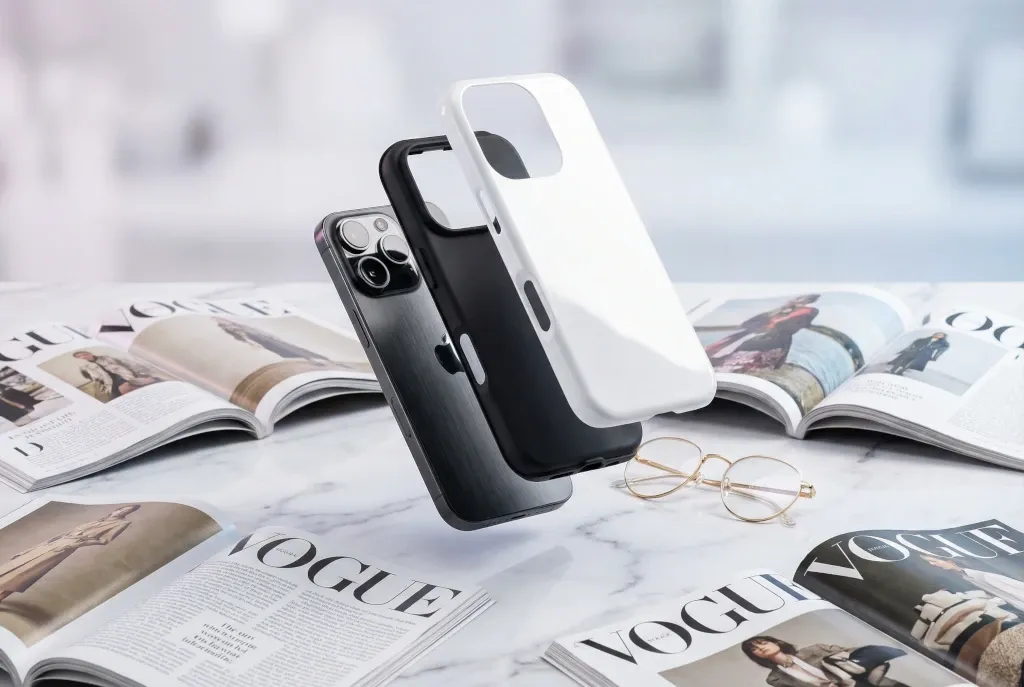
The best phone cases combine a PC backplate with TPU bumpers. You get the print quality and scratch resistance of polycarbonate with the shock absorption and durability of TPU. That's the approach we use at ChicScreens, and it's the same approach used by every serious case manufacturer.
The Yellowing Curse, Explained
If you've ever owned a clear case, you've watched it turn yellow. It happens to everyone, and the chemistry is straightforward: UV radiation from sunlight and oils from your skin cause oxidation in the plastic. The material literally breaks down at a molecular level, turning from transparent to that familiar murky yellow.
Two technologies fight this. Blue-resin formulations counteract the yellow shift with a complementary tint that keeps the case looking clear longer. Antioxidant coatings on the surface slow down the chemical reaction that causes discoloration in the first place. Neither makes a case immortal, but a case with both technologies will stay clear for significantly longer than a basic one.
For a deeper dive into material differences, check out our Hard Shell vs. Soft Silicone comparison.
The Psychology of Color and Trends
Phone cases have become something fashion writers call the "new lipstick" — an affordable luxury that signals personal taste. You might not buy a new handbag every season, but a $30 case lets you align with whatever aesthetic is speaking to you right now.
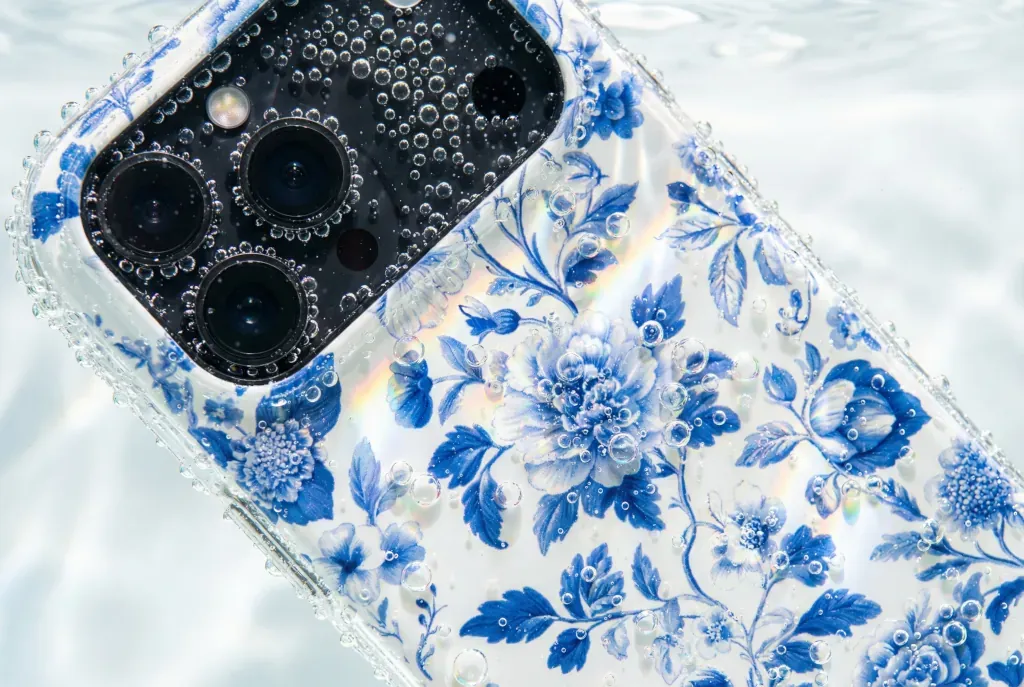
The trend cycle in phone cases now mirrors fashion. The "Clean Girl" minimalism of 2024 has given way to bolder choices: animal prints, dark florals, chrome finishes, and unapologetic color. Your case is a billboard for your taste, and people notice.
Curious about what's coming next? Our 2026 Phone Case Trend Forecast breaks down the five biggest aesthetic shifts this year, from "Mob Wife" luxury to Cyber Sigilism.
The Rule of Three: Matching Your Ecosystem
Styling a phone case isn't about matching everything perfectly. It's about creating a cohesive look across three touchpoints:
1. The Outfit: Print cases work best with solid-color outfits. A busy outfit plus a busy case creates visual noise. If you're wearing a patterned dress, go for a solid or marble case. If you're in all black, that's when you let your case do the talking.
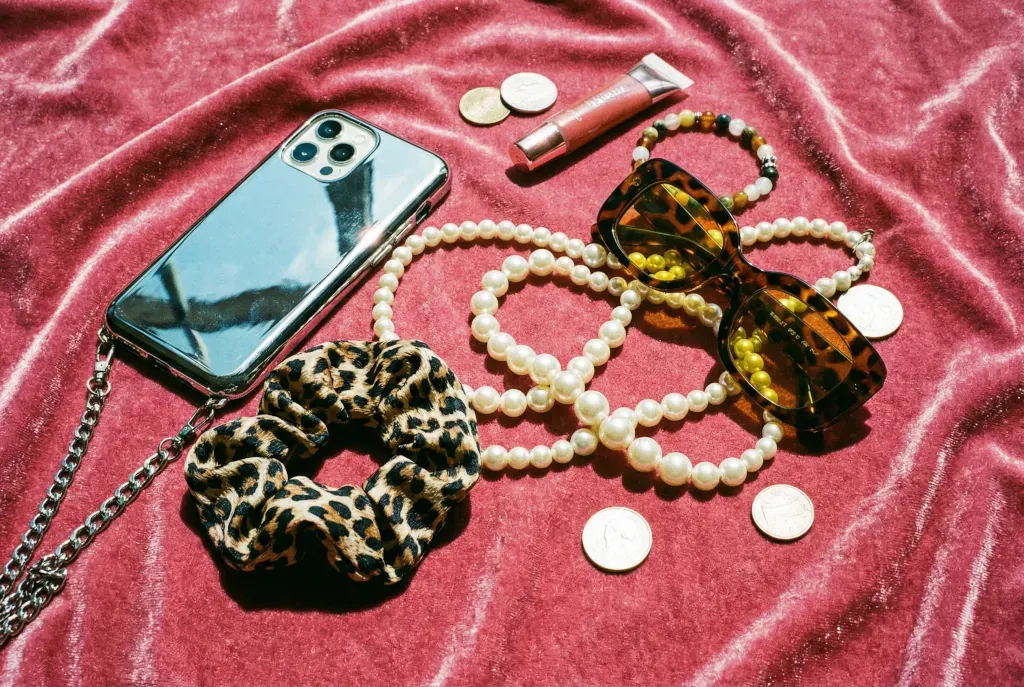
2. The Accessories: Your case sits next to your bag, your rings, your nails. Pay attention to metal tones. Gold hardware on your bag pairs naturally with warm-toned cases. Silver jewelry leads you toward cool tones and chrome finishes. This doesn't mean everything has to match exactly — intentional contrast works just as well.
3. The Wallpaper: Your lock screen shows every time you check your phone. Coordinating your wallpaper with your case creates a seamless look from front to back. It's a small detail that people notice.
For a complete styling playbook, read our guide on matching your phone case to your handbag.
Do You Really Need MagSafe?
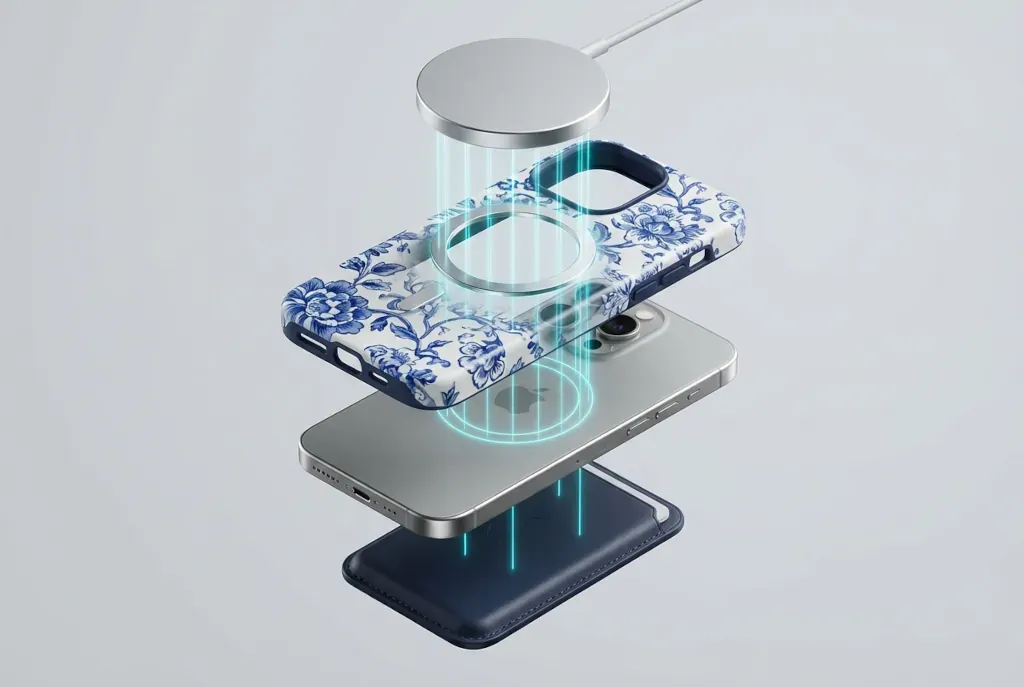
Short answer: yes, if you use any wireless accessories. MagSafe is a ring of magnets inside your phone that lets you snap on chargers, wallets, grips, and mounts. The problem is that cheap cases weaken the magnetic connection by creating too much distance between the magnets.
A proper MagSafe case has its own built-in N52-grade magnets that bridge the gap. Your wallet stays on. Your charger aligns perfectly every time. Your car mount actually holds.
The aesthetic concern is the visible ring on clear cases. The best designs either hide the magnets inside opaque layers or integrate the ring into the design as a decorative element.
For the full breakdown, read MagSafe Explained: The Secret to the Wireless Aesthetic.
Grip vs. Glide
A case needs to do two contradictory things: slide smoothly into your jeans pocket and stay firmly in your hand when you're using it. Too grippy and you'll struggle to pull it out of tight pockets. Too smooth and it'll slide off your lap or out of your hand.
TPU finds the middle ground here. It has enough surface friction to feel secure in your hand without the sticky, lint-grabbing quality of silicone. The back plate (polycarbonate) is smooth enough for easy pocket access while the TPU bumper provides grip where your fingers actually hold the phone — around the edges.
Care and Maintenance
Your case needs occasional cleaning to stay looking good and to keep bacteria in check. Phones carry significantly more bacteria than most surfaces you touch daily, and your case absorbs oils, makeup, and dirt over time.
What to use: Mild dish soap with warm water and a soft microfiber cloth for regular cleaning. For disinfecting, 70% isopropyl alcohol on a lint-free cloth works well — 70% is actually more effective than higher concentrations because the water content helps it penetrate bacterial cell walls.
What to avoid: Acetone dissolves polycarbonate plastic. Bleach discolors everything. Ammonia-based window cleaners cause instant cloudiness in clear cases. Boiling water warps TPU bumpers and ruins the fit.
We've written a complete step-by-step guide: How to Disinfect Your Phone Case Without Ruining the Design.
The Bottom Line
You don't have to choose between a case that looks good and a case that works. The combination of TPU bumpers, polycarbonate backplates, raised bezels, and proper engineering gives you both. The key is knowing what to look for: shock-absorbing materials, a 1.5mm+ raised lip, corner air pockets, and quality printing that won't fade or peel.
Your phone is the most-used accessory you own. It deserves protection that doesn't make you wince every time you pull it out next to your favorite bag.
Ready to upgrade?
Browse cases engineered with German TPU, 2mm raised bezels, and prints that actually last.
Shop Now