How to Disinfect Your Phone Case (Without Fading the Design or Melting the Plastic)
Your phone touches your face, your hands, every surface you set it on, and the inside of your bag dozens of times a day. Studies consistently show phones carry significantly more bacteria than most household surfaces. You already know you should clean it. The problem is that the cleaning products sitting under your sink will destroy your case faster than any bacteria will.
Windex clouds clear plastic. Bleach discolors prints. And the acetone in nail polish remover? It literally melts polycarbonate. If you paid good money for a case with a design you love, you need a method that kills germs without killing the aesthetic.
Here's how to do it right.
The "Do Not Touch" List
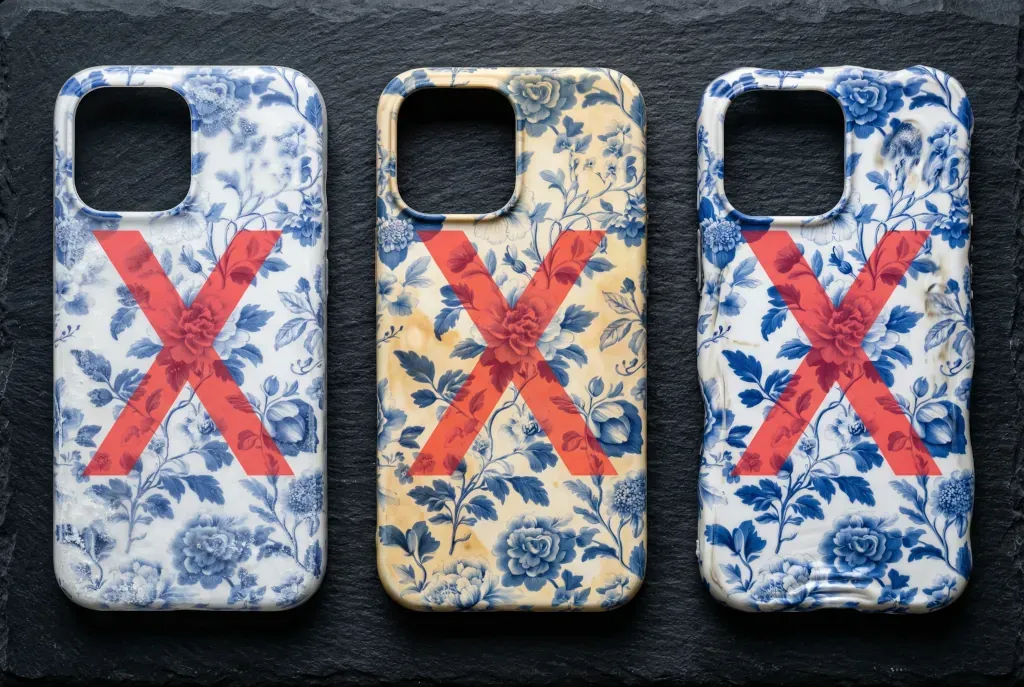
Before we get to what works, here's what will ruin your case immediately:
Acetone (nail polish remover) is enemy number one. It dissolves polycarbonate plastic on contact. One wipe and your glossy case turns cloudy, sticky, and warped. If you remember one thing from this article, let it be this: keep acetone away from your phone case.
Pure alcohol (90% or higher) is too aggressive. It strips the oleophobic coating — that anti-fingerprint layer on the surface — and dries out the plastic over time, causing hairline cracks.
Ammonia-based cleaners like Windex cause instant cloudiness in clear cases. The ammonia reacts with the plastic and creates a haze that's impossible to reverse.
Boiling water warps TPU bumpers. The heat softens the material and distorts the shape, making the case fit loosely. A loose case is worse than no case — it pops off during drops.
Know Your Print Type
Not all designs are applied the same way, and the method matters for how aggressively you can clean.
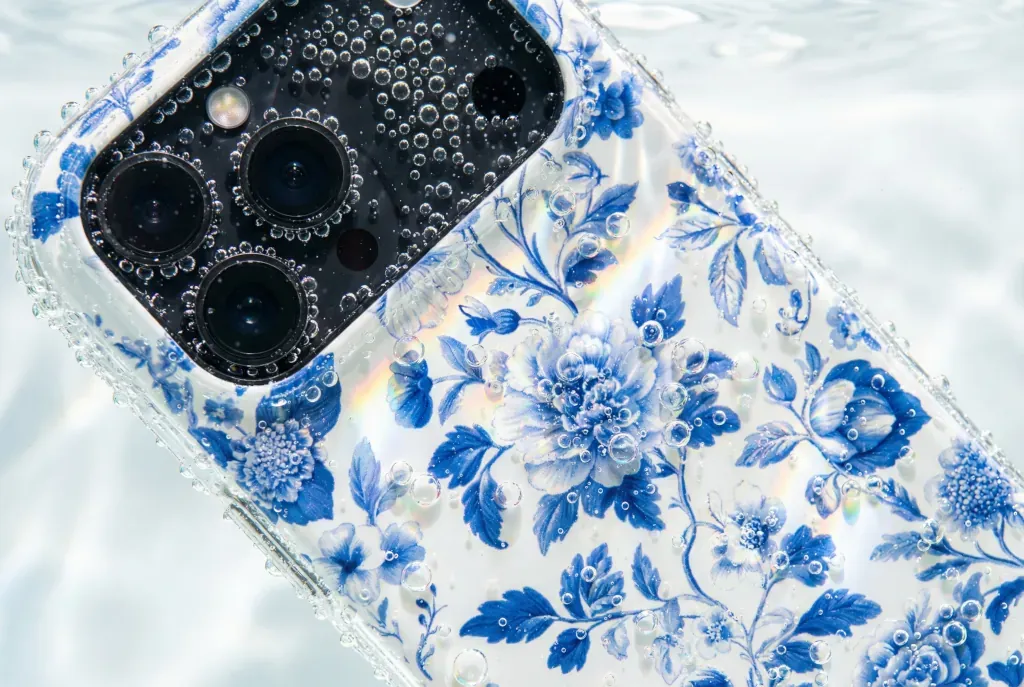
Sublimation (Dye-Sublimation): The design is infused directly into the case material using heat and pressure. The dye becomes part of the surface itself rather than sitting on top, so you can't scratch it off or peel it away. These prints are highly durable and resist fading, making them easy to clean. Most ChicScreens cases use this process.
In-Mold Decoration (IMD): The design is sandwiched between layers of plastic — literally sealed inside the case. You can't scratch it off or wipe it away because there's a protective layer on top. These are among the most durable and the easiest to clean.
Surface Print (UV Print): The design sits on top of the plastic. You can sometimes feel the texture of the ink with your fingertip. These need gentler handling — no scrubbing, no abrasive cloths.
Foil and Metallic Accents: Gold foil, holographic strips, and metallic details are extremely sensitive to friction. Never scrub these. Wipe only, and gently.
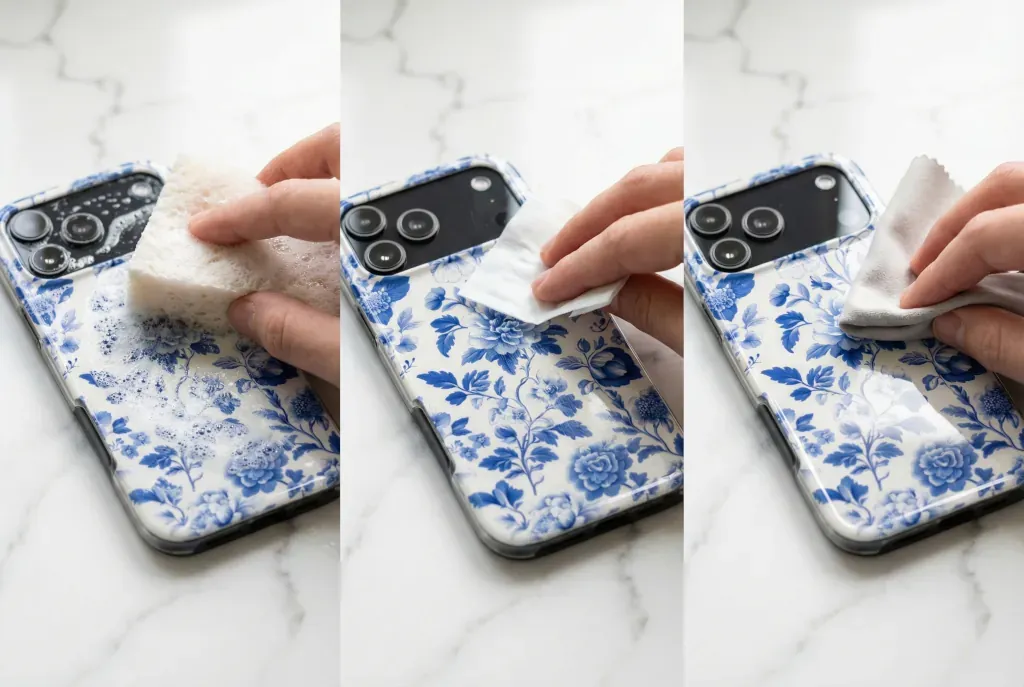
The 3-Step "Aesthetic Safe" Clean
Step 1: De-Grime (Remove Makeup and Oils)
Remove your phone from the case first. Mix warm water with a small amount of mild dish soap — nothing fancy, regular dish soap works perfectly.
Use a soft microfiber cloth for the flat surfaces and a soft-bristled toothbrush for the crevices around buttons and the charging port. Work in gentle circles across the surface. Don't scrub hard on printed areas.
For stubborn foundation stains on white or light-colored bumpers: Try a clean white eraser (the kind you'd use on paper). The gentle abrasion lifts makeup residue without damaging the plastic. This is a stationery trick that works remarkably well on TPU.
Rinse the case under warm running water and shake off the excess.
Step 2: Disinfect (Kill the Bacteria)
Dampen a lint-free cloth with 70% isopropyl alcohol. Not 90%, not 99% — specifically 70%.
This sounds counterintuitive, but the lower concentration is actually more effective at killing bacteria. The water content in 70% alcohol helps it penetrate bacterial cell walls, and it evaporates more slowly, giving it enough contact time to do its job. Pure alcohol evaporates too fast to work properly.
Wipe the entire case firmly with the dampened cloth. Don't spray alcohol directly onto the case — you want control over where it goes, especially around printed areas. One thorough wipe is enough.
Set the case down and let it air dry completely. This takes about two minutes.
Step 3: Finish (Restore the Shine)
Once the case is fully dry, buff it with a clean, dry microfiber cloth. This removes any remaining residue and polishes the polycarbonate backplate back to its original clarity.
That's it. Three steps, five minutes, and your case is clean, disinfected, and undamaged.
Special Care Situations
Clear case yellowing: You can clean surface yellowing caused by dirt and smoke residue with a baking soda paste (baking soda mixed with a little water, applied for 15 minutes, then rinsed). But internal yellowing caused by UV exposure is permanent — the plastic itself has oxidized, and no amount of cleaning will reverse it. If your clear case has gone yellow from sun exposure, it's time for a replacement.
Phone charms and accessories: Clean the string or cord with mild soap and water, but dry metal clasps immediately. A hairdryer on the cool setting speeds this up. Leaving metal hardware wet causes tarnishing and eventually rust.
The MagSafe ring area: Dust and debris collect in the circular indent where the magnets sit. Use a dry cotton swab to clean this area. The magnetic field attracts tiny metal particles over time, and a buildup can weaken the connection with chargers and wallets.
UV Sanitizers: Worth the Money?
UV-C light sanitizer boxes (like PhoneSoap) use ultraviolet light to kill bacteria without any chemicals or physical contact. For surface-printed cases with delicate details, foil accents, or cases you simply don't want to risk wiping, a UV sanitizer is the safest option available.
The trade-off is cost — they run between $30 and $80 — and they only sanitize. They don't clean off visible grime, makeup, or oils. You'll still need soap and water for that. But as a daily disinfection step, especially during cold and flu season, they're worth considering.
How Often to Clean
Daily: A quick wipe with a slightly damp microfiber cloth. Takes ten seconds and prevents buildup.
Weekly: The full three-step method — soap wash, alcohol disinfect, buff dry. This is enough to keep your case hygienic and looking fresh.
Monthly: Remove any phone charms or accessories and clean them separately. Check the case edges for wear.
Understanding your case material is the first step to taking care of it properly. For a full breakdown of TPU, polycarbonate, and silicone, read our Science of Style guide.
Start fresh
If your old case didn't survive the cleaning, our sublimation-printed cases infuse the design into the material — it can never wipe off.
Shop Cases